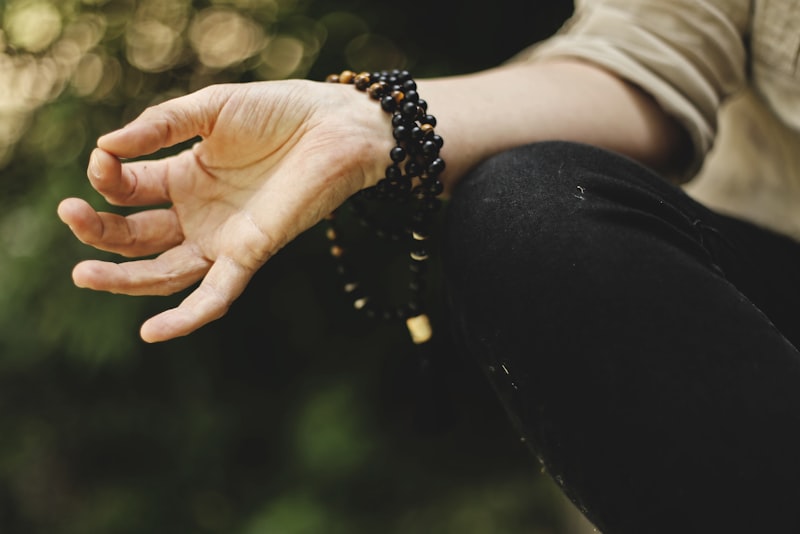
You don't need a serene studio with floor cushions and a singing bowl to meditate. You need a place to sit and a few minutes. Still, having a small spot that's yours — somewhere your body learns to associate with settling down — can make the habit far easier to keep.
Why a dedicated spot helps#
Habits love cues. When you always meditate in the same place, that place quietly becomes a trigger. Sitting down there starts to mean "this is where I slow down," before you've even taken a breath. Your brain does some of the work of settling for you, simply through repetition.
It also removes a small daily decision. If you have to hunt for somewhere to sit each time, that tiny friction is often enough to make you skip it. A spot that's ready and waiting takes the choosing out of it. You just go there.
There's a gentle psychology at play, too. A spot you've used many times carries a kind of memory. When you sit down, some part of you recalls the calm you've found there before, and that expectation alone can start to settle you. It's the same reason a favourite reading chair feels cosy before you've opened the book. You're not imagining it — you're borrowing from every quiet minute you've already spent there.
None of this requires a spare room, and chasing the "perfect" meditation space can quietly become another way to avoid actually meditating. The aim is humble: a corner you return to, not a shrine you build. A folded blanket by the window that you use every morning beats a beautiful room you visit twice a year.
Pick the spot first#
Start by looking honestly at the home you already have. You're not after the most photogenic corner — you're after a workable one. Walk through and ask where you could realistically sit undisturbed for ten minutes.
A few things make a spot easier to use:
- Quiet enough. Total silence is rare. Aim for a place away from the busiest noise and foot traffic of the house.
- A little natural light. A window nearby, or a soft lamp, feels gentler than harsh overhead lighting.
- Out of the main flow. A bedroom corner, a reading chair, the end of a hallway — somewhere you won't be in everyone's way.
- Easy to get to. If it takes effort to reach, you'll use it less. Closer and plainer wins.
Don't overthink it. The side of your bed counts. A particular armchair counts. A cushion in the corner of the spare room counts. What matters is that it's the same place most days, not that it's set apart from the rest of your life.
Keep what you add simple#
Once you have your spot, resist the urge to fill it. A meditation space works best when it's calm to look at, and clutter is the opposite of calm. A few well-chosen things do far more than a pile of props.
Think about comfort before anything else. Whatever you sit on should let you stay reasonably upright without strain — a firm cushion, a folded blanket, a low stool, or simply a steady chair with your feet flat on the floor. If your body's fighting the position, your mind won't settle. Comfort isn't a luxury here; it's the foundation.
Beyond a seat, a small handful of touches can make the corner feel inviting without cluttering it. A soft blanket for cooler mornings. A single plant, if you like green things nearby. Maybe a candle or a warm-toned lamp to soften the light. A small object that means something to you — a stone, a photo — can give your eyes a gentle resting place if you meditate with them open.
A meditation space is finished not when there is nothing left to add, but when there is nothing left to take away.
That's genuinely the whole brief. If you can sit comfortably, the light is soft, and the area is tidy, your space is done. Everything else is optional decoration, and decoration is never what makes meditation work.
Make it yours, on any budget#
You can spend nothing at all and have a perfectly good space. A floor cushion from a closet, a blanket you already own, and a quiet corner is a complete setup. Some of the steadiest practitioners I know meditate on the same kitchen chair every morning and have never bought a single "meditation" item in their lives.
If you do want to invest a little, a proper meditation cushion or a supportive chair is usually the only thing worth the money, because comfort directly affects whether you keep going. The candles and crystals and apps can come later, or never. Spend on the seat, save on the scenery.
A few small touches can help the space pull its weight in your day. Keep a timer or your phone nearby but face-down, so you're not tempted to scroll your way out of stillness. If you share your home, a gentle signal to others — a closed door, a quiet word — protects your few minutes. And consider tying the space to a time: same corner, same part of the morning or evening. The when and the where reinforce each other.
Let the space serve the practice#
It's easy to fall in love with the idea of a meditation space and forget what it's for. The corner isn't the point. The minutes you spend there are. A plain spot you actually use is worth infinitely more than a beautiful one you photograph and abandon.
So keep your ambitions small and your corner simple. Find a place, make it comfortable, clear away the clutter, and then — most importantly — go and sit in it. Meditation is a gentle support for everyday wellbeing, not a cure for serious distress; if you're struggling with ongoing anxiety or low mood, a doctor or therapist is the right kind of help, and a calm corner at home can quietly sit alongside that. Start with the spot you already have today, and let it grow only if it earns its place.